Columbia City Green
Location:
Seattle, Wash.
Type:
Residential development
Architectural firm, general contractor:
Case Design & Project Management - Seattle, Wash.
Distributor:
Goldfinch Brothers - Seattle, Wash.
Product used:
Series 920 casement, projected and picture windows - Milgard - Tacoma, Wash.
Aluminum finishing (anodize and pour and debridge thermal barrier):
Sapa - Portland, Ore.

»Print version PDF 316 Kb | more case studies


Columbia City Green
Low-impact, reduced carbon footprints with expansive views in the Case-designed home

Columbia City Green


Situation:
A Seattle-based architecture and building firm is developing urban homes, live/work loft homes and light commercial buildings with environmental sustainability in mind. Significantly more energy-efficient than the best traditionally-built homes, most of the dwellings feature green roofs, insulated concrete form foundations and walls, rainwater harvesting, solar pre-heating water systems, and radiant floor heat—and aluminum thermal barrier windows.
The design team at Case is particularly fond of using locally sourced materials when possible. The homes are built mostly in existing residential areas where sloping terrain and spectacular views make up for smaller lots.
Action plan:
The windows in homes play a vital role in keeping the inclement weather out, while bringing the natural light in at the same time.
Windows as a design element have a great effect on aesthetic, efficiency, indoor air quality, and the overall enjoyment of the occupants of the homes.
Window material choices are worthy of careful consideration for anyone looking to build or remodel. Case Design and Project Management chose to use aluminum windows at Columbia City Green and other similar residential and light commercial projects designed and built in the Seattle area within the past few years.


Compared to other materials, the aluminum thermal barrier window types are stronger, yet inexpensive, have the potential to close the loop in manufacturing processes, and the windows will hold up to stresses, weathering and look great when used in large openings.

About the fenestration product:
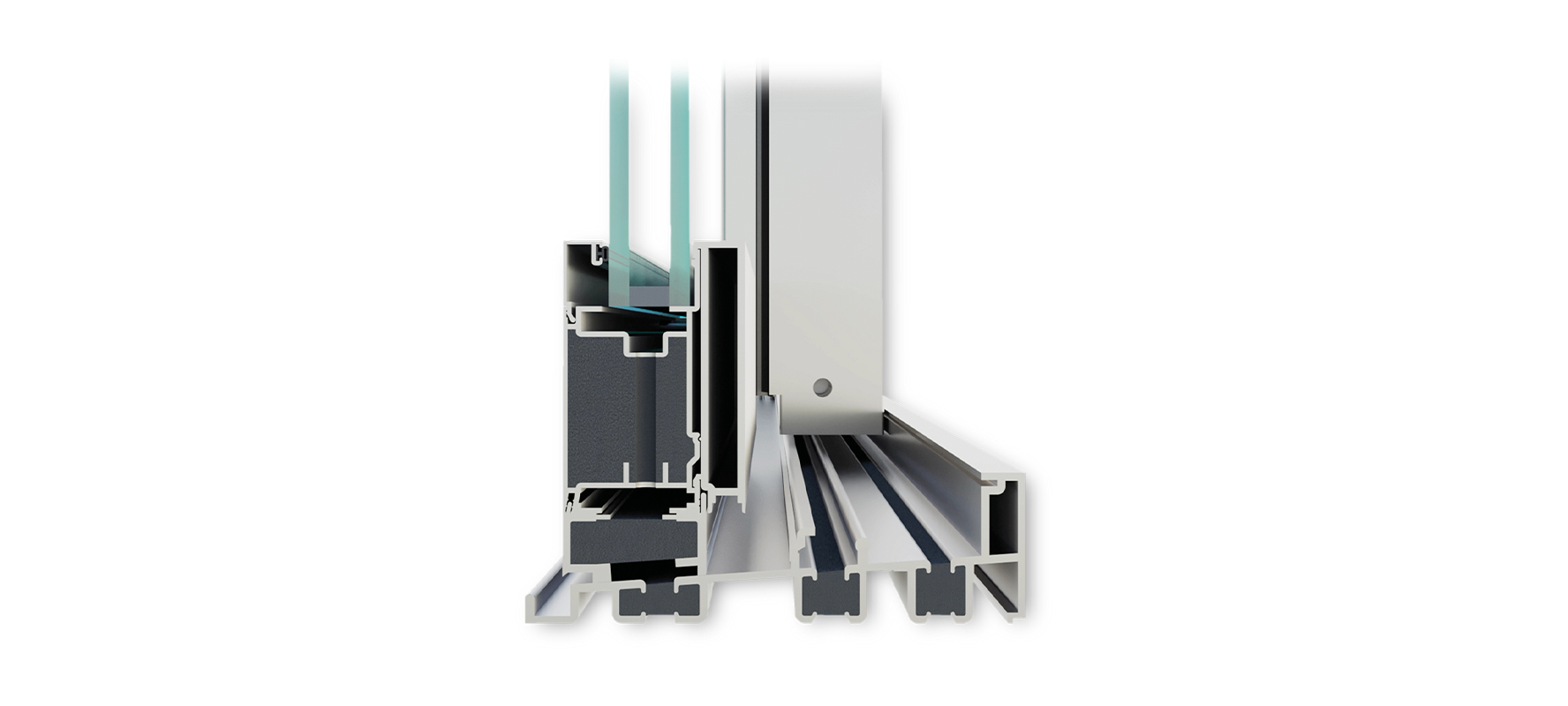
Thermally improved aluminum 920 series windows feature Milgard’s SunCoat® low-E high-performance insulating glass (standard in all Milgard windows and doors).
The pour and debridge thermal-break frame design and higher thermal rating means greater energy efficiency.
Milgard currently manufactures windows and doors in 2 facilities in the Pacific Northwest (Tacoma, Wash. and Portland, Ore.), 4 facilities in California (Sacramento, Hollister, Simi Valley and Temecula), 1 facility in Phoenix, Ariz., and 1 facility in Aurora (Denver Metro Area), Colo., 1 facility in Salt lake City, UT, Dallas/Fort Worth, TX.
Compared to other materials, the aluminum thermal barrier window types are stronger, yet inexpensive, have the potential to close the loop in manufacturing processes, and the windows will hold up to stresses, weathering and look great when used in large openings.

Outcome:
The developer chose the Milgard aluminum window because of its slimmer profile, clear anodized color, the fact that aluminum is recyclable, and because the windows fit within their budget.
Because the Case team is also thinking of local sourcing and long-term use for the projects they develop, factors such as durability and warranty are important. The Milgard company offers a lifetime warranty to the original owner in residential applications where the light commercial 920 series windows are used.

Print version PDF (316 KB)

Sources:Tony Case, AIA,case-architects.com
John Tremble, LEED AP, Milgard, milgard.com

Photo credits: Figure 1, Figure 2  ©Orhun Uygur, Turkphoto Inc., Figure 3 © Milgard Windows